Journaling Self-Help Books
I often suggest to my clients that they keep a journal of their emotions during a time of crisis. It provides a safe place to put the strong feelings that are coursing through them and it relieves them of expending the energy required to keep track of the important feelings they are having. Read more »
Recommended Self Help Books on Journaling
 At a Journal Workshop: Writing to Access the Power of the Unconscious and Evoke Creative Ability
The Intensive Journal Process is a complex and systematic method for gaining self-insight by recording thoughts, dreams and significant events which are then used as focal points for meditation and written reflection in separate sections. This is a fascinating self help guidebook for those seriously committed to exploring journal writing as a means of self-discovery. 1992, Jeremy P. Tarcher
The author calls her journal the "79 cent therapist," referring to the cost of a cheap spiral bound notebook. Drawing upon proven journaling techniques, Kathleen Adams provides a powerful tool for better living: a step-by-step self help approach to personal growth, creative expression and career enhancement. 1990, Warner Books
 Keeping a Nature Journal: Discover a Whole New Way of Seeing the World Around You
The authors offer simple techniques to give first-time journal-keepers the confidence to go outside, obseve the natural world, and sketch and write about what they see. At the same time, they motivate longtime journal-keepers to hone their powers of observation as they immerse themselves in the mysteries of the natural world. 2003, Storey Publishing
 The New Diary: How to Use a Journal for Self-Guidance and Expanded Creativity
This useful self help book for journaling beginners is filled with practical methods for "getting going." An excellent introduction to journaling for self-understanding, self-acceptance, creative inspiration and inner liberation. 1979, Jeremy P. Tarcher
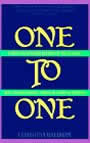 One to One: Self-Understanding Through Journal Writing
This self help book is a fine resource for accessing the therapeutic powers of the act of writing. Baldwin encourages the reader to find his or her own honest and open way to reflect upon their life's journey. 1992, M. Evans and Company
 The Self-Esteem Guided Journal: A Ten Week Program
The Self-Esteem Guided Journal uses guided journaling to help readers teach themselves to vocalize their feelings, conquer self-doubt, discover their strengths -- and generally change the way they think and feel about themselves for the better. This ten-week program of writing exercises will help you shift your focus from the things wrong with your life to the things that are right. Through a combination of exploratory questions, comprehensive writing exercises, and short inspirational anecdotes, The Self-Esteem Guided Journal: A Ten Week Program helps readers learn to build a strong sense of self-worth. 2005, New Harbinger
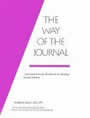 The Way of the Journal: A Journal Therapy Workbook for Healing
This self help book teaches journal writing in a way that maximizes structure, pacing and a feeling of safety while minimizing the risk of boredom or over-stimulation. Adams' ten-step method of writing offers a continuum of journal interventions that are of use to anyone, but particularly to people in pain who wish to gain greater self-understanding. 1998, Sidran Press
 The Writing Cure: How Expressive Writing Promotes Health and Emotional Well-Being
This scholarly self help book presents groundbreaking research on the cognitive, emotional and biological pathways through which disclosure and expressive writing influences mental and physical health. The breadth and richness of the individual chapters give readers a profound appreciation of an impressive array of approaches. 2002, American Psychological Association
 Writing For Emotional Balance: A Guided Journal To Help You Manage Overwhelming Emotions
In Writing For Emotional Balance, Jacobs provides readers with a progressive, step-by-step guide for keeping a journal easily and effectively. Journals, she writes, are "a checkpoint between your emotions and the world." She guides readers through various processes to clarify our understanding of the subjective nature of emotions and how they are influenced by time and memory. Readers then learn how to define and evaluate their emotions, predict their emotional patterns, release emotions that no longer serve them, and refocus and organize their emotional life in ways that are more appropriate and fulfilling. 2005, New Harbinger
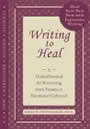 Writing to Heal: A Guided Journal for Recovering from Trauma and Emotional Upheaval
This self help book takes readers through a series of guided writing exercises that help them explore their feelings about difficult experiences. The approach is based upon the field of expressive emotions therapy (EET), developed by the author. The book stresses thoughout the healing power that lies in story-telling, whether through fiction, dance, or art. The reader is left with a strong sense of their value in the world. 2004, New Harbinger